
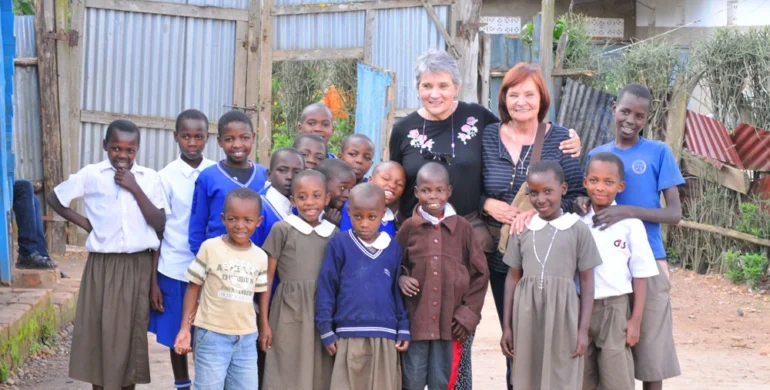
What can i donate to Orphans in Uganda. Cash isn’t the only way to change a child’s life. Across Uganda, orphanages and vulnerable households often need specific, tangible items just as urgently as they need money — school shoes that actually fit, a mosquito net that keeps malaria away, a mattress that isn’t shared by three siblings. If you’ve been asking yourself “what can I actually donate to orphans in Uganda that will genuinely help?” — this guide breaks it down category by category.
At Kigezi Foundation, we support orphaned and vulnerable children across the Kigezi region of southwestern Uganda, near Bwindi and Mgahinga National Park. This article walks through the most needed physical donations, how to send or deliver them, and how in-kind giving compares to monetary donations — so you can choose the option that fits your circumstances and makes the biggest difference.
Why In-Kind Donations Matter Just as Much as Money
It’s easy to assume that cash is always “better” because it’s flexible. But for many families and caregivers in rural Uganda, the barrier isn’t just a lack of money — it’s a lack of access. A guardian may have saved enough shillings for school shoes, but the nearest market with children’s sizes could be an entire day’s travel away. A donated item that arrives ready to use removes that logistical burden entirely, and it also carries an emotional weight that money sometimes doesn’t: a child can hold a new pair of shoes, wear a donated jacket, or read a book someone chose specifically for them.
That said, in-kind giving works best when it’s coordinated rather than random. Sending items that aren’t actually needed, or that don’t suit the local climate and culture, can create more logistical burden than benefit. That’s why we always recommend checking current needs through our contact page before sending or purchasing items in bulk.
It also helps to think about the difference between “one-time” and “recurring” needs when deciding what to give. Some items, like a mattress or a solar lamp, are largely a one-time purchase that lasts for years. Others, like exercise books, soap, or sanitary supplies, are consumed continuously and need to be replenished term after term. Knowing which category your intended donation falls into can help you decide whether a single in-kind gift or a recurring financial contribution through the donation page makes more sense for the specific need you want to address.
Educational Supplies and School Items
Education is the single biggest lever for lifting a child out of poverty long-term, and it’s also one of the areas where donated items go furthest. Commonly needed school-related donations include:
- Exercise books, pens, pencils, and rulers — basic but constantly needed, since Ugandan schools require students to supply their own stationery.
- School uniforms — many schools have strict uniform policies, and children without a proper uniform are sometimes sent home.
- Sturdy school shoes — often the single most requested item, since children frequently walk long distances to school.
- Backpacks or school bags — to protect books and supplies during the walk to and from school.
- Textbooks and storybooks — appropriate for local curricula or simple English-language readers for younger children.
- Solar-powered study lamps — invaluable in areas without reliable electricity, allowing children to study after dark.
You can support our ongoing Orphan Education Support initiative directly by contributing supplies or funds toward it through our current projects page, which also tracks progress on the Kinanira Secondary School construction project.
Clothing and Everyday Essentials
Clothing donations are always welcome, but a few guidelines make them far more useful:
- New or gently used children’s clothing, appropriate for Uganda’s mild, temperate climate in the Kigezi highlands (light layers, including a few warmer items for cooler mountain evenings).
- Undergarments and socks, which are rarely donated but almost always needed.
- Shoes and sandals in a range of children’s sizes.
- Blankets and warm sleepwear, especially given the cooler nights common in the hilly Kigezi region compared to Uganda’s warmer lowlands.
- Sanitary products for adolescent girls — a critical but often overlooked need. A lack of sanitary supplies is one of the leading reasons girls miss school days each month in rural Uganda.
If you’re unsure about sizing, quantities, or seasonal timing, reach out through our contact page before shipping or bringing a large quantity of clothing.
Health and Hygiene Items
Basic healthcare and hygiene products can prevent illnesses that would otherwise interrupt a child’s schooling or, in more serious cases, threaten their life. Frequently needed items include:
- Mosquito nets, essential for malaria prevention in a region where the disease remains a leading cause of childhood illness.
- Basic first-aid supplies — bandages, antiseptic, oral rehydration salts.
- Soap, toothbrushes, and toothpaste.
- Deworming and vitamin supplements (coordinated with local health outreach rather than self-administered).
- Basic medications, only when coordinated directly with our team or a licensed medical partner, to ensure appropriate and safe distribution.
Our Healthcare Outreach project organizes periodic medical camps for vulnerable children and families across the Kigezi region, and donated medical supplies are often incorporated directly into these outreach events.
Food and Nutrition Support
Chronic hunger and malnutrition remain serious challenges for many orphaned and vulnerable children in rural Uganda. While shipping perishable food internationally isn’t practical, there are still effective ways to support nutrition:
- Donating funds earmarked specifically for food and nutrition programs, allowing local staff to purchase fresh, culturally appropriate food such as beans, maize flour, rice, and vegetables.
- Sponsoring a feeding program at a school or orphanage for a term or a full year.
- Contributing toward agricultural or kitchen-garden projects, which create longer-term food security rather than one-time relief.
If nutrition support is a cause close to your heart, mention this preference when you give through the donation page so your contribution can be directed accordingly.
Toys, Books, and Recreational Items
Childhood should include play, not just survival. Donated toys, books, and recreational equipment help restore a sense of normalcy and joy for children who have already faced significant hardship. Well-received recreational donations include:
- Age-appropriate storybooks, picture books, and simple English readers.
- Educational toys and puzzles.
- Sports equipment — footballs, netballs, skipping ropes — which are inexpensive but heavily used and appreciated.
- Art supplies such as crayons, coloring books, and drawing paper.
- Board games that can be shared among groups of children in a communal setting.
These items are relatively easy to ship or carry if you’re planning a visit, and they consistently rank among the most joyfully received donations by the children themselves.
Shelter, Bedding, and Household Items
Behind-the-scenes household items rarely make it onto typical donation wish lists, but they matter enormously to daily quality of life:
- Mattresses and bedding — many children currently share overcrowded sleeping spaces or sleep on the floor.
- Mosquito nets for sleeping areas (in addition to individual nets already mentioned above).
- Kitchen and cooking equipment for group homes and orphanage kitchens.
- Water storage containers, given the distance many households must travel to access clean water.
- Solar lighting and basic electrical equipment for orphanage dormitories without reliable power access.
Larger shelter-related needs, such as the ongoing school block construction, are best supported financially through our projects page, since construction materials are more efficiently and cost-effectively sourced locally in Uganda than shipped internationally.
Skills-Building and Career Development Donations
For older children and teenagers approaching the end of secondary school, the most valuable “donation” often isn’t a physical item at all — it’s an investment in their future career path. This is where our partnership with KCI Institute becomes especially meaningful.
KCI Institute offers practical, career-focused training across fields such as tourism, hospitality, business, and heavy machinery operation. Donors who want to make a lasting, multi-generational impact can consider sponsoring a young person’s transition from secondary school into one of KCI Institute’s certificate or diploma programs, giving them a genuine pathway toward stable, independent employment rather than a return to the cycle of poverty. You can learn more about enrollment requirements on their admissions page.
How Donated Items Are Distributed Fairly
A common concern among donors is whether their contribution will actually reach the children who need it most, rather than being lost, misallocated, or given unevenly. At Kigezi Foundation, donated items are logged, sorted, and distributed according to documented household and child assessments — meaning the children with the greatest immediate need, such as a child about to be sent home from school for lacking a uniform, are prioritized first.
For larger shipments or drives, we typically coordinate a distribution day where items are handed out directly, often alongside a health check or educational session, so that giving becomes part of a broader moment of care rather than a simple handout. If you’d like details on how a specific past donation was distributed, our team is happy to share an update — just ask through the contact page.
This kind of accountability matters just as much for physical donations as it does for money, and it’s part of why Kigezi Foundation maintains close, ongoing relationships with the schools, guardians, and community leaders who help identify which children need support most urgently.
Money vs. Items: Which Should You Choose?
Both approaches have real value, and the right choice often depends on your situation:
- Choose monetary donations if you want maximum flexibility, want to support ongoing needs like tuition or medical care, or if shipping physical goods internationally isn’t practical for you. Give directly through the donation page.
- Choose in-kind donations if you’re planning to visit Uganda, have access to bulk quantities of new items (such as through a school, church, or workplace drive), or want a tangible way to involve your own children or community in the act of giving.
- Combine both — many donors send a shipment of school supplies or clothing alongside a financial contribution to cover logistics, distribution, and any gaps in the items received.
Whichever route you choose, always coordinate with the Foundation directly through the contact page beforehand, so your generosity is matched precisely to current, verified need rather than guesswork.
How to Organize a Donation Drive
If you want to multiply your impact, consider organizing a donation drive through your school, workplace, church, or community group. A successful drive typically involves:
- Choosing a focused category — for example, “school shoes and stationery” or “sanitary products and hygiene kits” — rather than accepting anything and everything.
- Setting a collection window, such as two to four weeks, with a clear drop-off point.
- Sharing specifics with contributors, including sizes, quantities, and condition guidelines (new or gently used, clean, and functional).
- Coordinating shipping or delivery logistics in advance with the Foundation through the contact page, since customs, transport, and distribution all need planning.
- Sharing the results with your group afterward — photos and updates help sustain enthusiasm for future drives.
Groups interested in a deeper, hands-on experience can also consider sending a representative to volunteer directly with the children through our volunteer program.
What Not to Donate
To keep donations useful and respectful, avoid the following:
- Used undergarments (new only, for hygiene reasons).
- Expired food, medication, or cosmetics.
- Heavily worn, torn, or stained clothing.
- Items unsuitable for the local climate, such as heavy winter coats or snow boots.
- Random bulk donations without prior coordination, which can overwhelm storage and distribution capacity.
A quick message through the contact page before sending anything ensures your donation lands exactly where — and how — it’s needed most.
The Everyday Impact of a Single Donated Item
It’s worth pausing on just how far a single, well-chosen item can travel in a child’s daily life. A pair of school shoes isn’t just footwear — it’s the difference between a child walking comfortably to class each morning and a child arriving with blistered, injured feet, or being turned away entirely for violating uniform policy. A mosquito net isn’t just fabric — it’s a direct barrier against a disease that remains one of the leading causes of childhood illness and missed school days in the region.
A solar study lamp means a child can finish homework after sunset instead of losing that time entirely once daylight fades, which in rural areas without electricity can happen as early as 7 p.m. A sanitary kit means a teenage girl doesn’t lose four or five school days every month, adding up to weeks of missed learning across a single year. None of these items are glamorous, and none of them make headlines — but together, they quietly determine whether a child stays in school, stays healthy, and stays on track toward a better future.
This is the lens we encourage donors to use when deciding what to give: not “what feels like a generous gesture,” but “what specific, unglamorous barrier is standing between this child and a normal, dignified childhood.” Often, the answer is something small enough to fit in a backpack.
Frequently Asked Questions About Donating Items to Orphans in Uganda
Can I ship donated items directly to Uganda? In some cases, yes, but international shipping can involve customs duties and delays. It’s best to coordinate through the contact page before shipping, or consider a monetary donation earmarked for the same purpose, which is often more efficient.
Is it better to buy items locally in Uganda rather than ship them? Often, yes. Purchasing items like school supplies, food, or construction materials locally supports the Ugandan economy, avoids shipping costs and delays, and ensures items match local needs and sizing. This is why financial donations through the donation page frequently go further than international shipments.
What is the most urgently needed item right now? Needs shift by season and by project — school-related items are most urgent around the start of each term, while healthcare supplies are needed year-round. Check with the Foundation directly, or review current needs on the projects page.
Can I bring donations with me if I visit Uganda? Yes, and many volunteers do exactly this. If you’re joining through the volunteer program, you can coordinate what to bring in advance so it matches real, current needs.
Can businesses or schools organize a donation drive? Absolutely. Schools, churches, and workplaces are some of our most effective donation partners. Reach out through the contact page to plan a drive together.
How do older children benefit once they finish school? Many transition into practical vocational training through partner institutions such as KCI Institute, giving them a genuine pathway toward independent careers after leaving the orphanage system.
Start Giving Today
Whether it’s a box of school shoes, a mosquito net, a stack of storybooks, or a monthly financial gift, every donation — physical or monetary — moves a child in the Kigezi region closer to safety, education, and opportunity. Explore our current projects to see exactly where the need is greatest right now, make a secure contribution through the donation page, or get in touch through our contact page to plan an in-kind donation or drive.
And for donors thinking about the long road ahead for the children we support, take a moment to learn more about our training partner, KCI Institute, whose vocational programs help turn a rescued childhood into an independent, self-sufficient future.
Every item matters. Every gift, big or small, tells a child they are not forgotten.