
Donate to healthcare in Africa. Across much of Africa, where you are born can still determine how likely you are to survive childhood, receive a safe delivery, or get treated for a preventable illness before it turns fatal. In Uganda, the gap between urban and rural healthcare is stark: urban centers host the vast majority of the country’s hospitals and specialists, while the majority of the population lives in rural areas with only a fraction of that capacity to serve them.
At Kigezi Foundation, we see this gap firsthand every day in the hills of the Kigezi region. This article explains why healthcare access remains one of Africa’s most urgent development challenges, the specific barriers rural Ugandan communities face, and the concrete ways your donation can directly save and improve lives.
Why Healthcare Access in Africa Remains a Crisis
Healthcare systems across much of sub-Saharan Africa are chronically under-resourced relative to population need. Uganda offers a clear illustration: the country has only a few thousand registered doctors serving a population of roughly 46 million people, a doctor-to-population ratio far below the World Health Organization’s recommended minimum. In practical terms, this means a single physician may be responsible for tens of thousands of patients, particularly outside major cities.
The disparity between urban and rural access compounds this shortage. Urban centers, home to a relatively small share of Uganda’s population, host a disproportionate majority of the country’s healthcare facilities and medical staff, while rural areas — where most Ugandans actually live — are left with a fraction of the infrastructure and personnel needed to serve them. For families in remote hillside villages across the Kigezi region, this imbalance is not an abstract statistic; it’s the difference between a treatable illness and a medical emergency with no accessible care.
The Realities of Rural Healthcare in the Kigezi Region
Rural communities across southwestern Uganda, including the districts that make up the Kigezi region, face a distinct set of interconnected barriers that keep even basic healthcare out of reach for many families:
- Long distances to the nearest facility. Many rural residents must travel significant distances over hilly, often unpaved terrain to reach the nearest health center, a journey that can take hours on foot and becomes especially dangerous during medical emergencies or complicated childbirth.
- Severe staffing shortages. Rural health centers frequently operate with only a handful of staff covering an entire catchment population, leading to long waiting times, staff burnout, and reduced quality of care even when a facility is physically accessible.
- Frequent medicine and equipment stock-outs. Even when patients reach a clinic, essential medicines and diagnostic equipment are often unavailable, forcing families to purchase medication privately at costs many cannot afford, or travel elsewhere for treatment that should have been available locally.
- Hidden costs of “free” care. While many public health services are technically free, transport, private medicine purchases, and informal costs mean healthcare remains effectively unaffordable for many of the poorest rural households.
- Limited maternal and child health services. Safe delivery care, prenatal checkups, and pediatric treatment are especially scarce in rural areas, contributing to preventable maternal and child mortality that would be far less likely with reliable access to trained care.
- High burden of preventable and treatable disease. Malaria, respiratory infections, waterborne illness, and non-communicable diseases such as hypertension and diabetes all become significantly more dangerous when patients cannot access timely diagnosis and treatment.
These overlapping barriers mean that for many families in the communities we serve, distance and cost — not the absence of medical knowledge — are what stand between a person and the care they need. You can learn more about the populations we serve on our About page.
The compounding nature of these barriers is what makes rural healthcare access such a stubborn problem to solve. A family might technically live within a reasonable distance of a health center, only to find it understaffed and out of essential medicine on the day they arrive. Or a facility might be well-stocked, but sit far enough away that the cost of transport alone makes the trip impossible for a household surviving on subsistence farming. Solving rural healthcare access, in other words, rarely comes down to fixing just one piece of the puzzle — it requires addressing distance, staffing, supply, and affordability together, which is precisely the gap that mobile, community-based outreach programs are designed to fill.
How Kigezi Foundation Is Closing the Healthcare Gap
Kigezi Foundation runs healthcare-focused programs designed to bring essential medical services directly to the communities that need them most, rather than requiring already-vulnerable families to overcome the distance, cost, and logistical barriers standing between them and formal healthcare facilities. Our core healthcare interventions include:
- Mobile medical camps, bringing screening, diagnosis, and basic treatment directly into underserved rural communities.
- Health support for vulnerable individuals and families, including orphans, elderly guardians, and displaced households who face the steepest barriers to formal care.
- Community health education, raising awareness of preventable disease, maternal health, and when to seek formal treatment.
- Referral support, helping patients with serious conditions access higher-level facilities when local care is insufficient.
- Partnership-driven outreach, working alongside volunteers, medical teams, and community leaders to extend our reach into the hardest-to-access villages.
You can see the current status of our active healthcare initiative, Healthcare Outreach in Kigezi Region, on our Projects page.
Healthcare Outreach in Kigezi Region: Bringing Medical Camps to Those Who Need Them Most
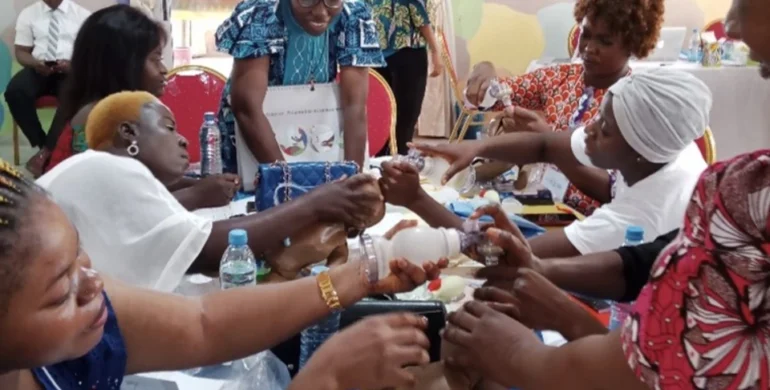
Our flagship healthcare initiative, the Healthcare Outreach in Kigezi Region program, organizes medical camps and direct health support for vulnerable communities and individuals across the region. For families living hours from the nearest formal clinic, these outreach camps often represent the only realistic opportunity to be screened, diagnosed, and treated by qualified medical staff in a given year.
Each outreach camp is designed to meet a community exactly where it is — literally and figuratively — bringing basic diagnostics, treatment, and referrals directly into villages rather than requiring already-struggling families to find the transport and funds to travel to a distant facility. Every donation to this program funds real, tangible outcomes: medicine distributed, conditions diagnosed early, and preventable illnesses treated before they become fatal. To directly fund an upcoming medical camp, visit our Donate page.
Why Preventive and Early Care Matters So Much in Rural Settings
In communities with limited access to healthcare, the difference between a manageable illness and a medical crisis often comes down to timing. A child with a treatable respiratory infection, if seen early, may recover within days with basic medication. The same child, without access to care, risks the infection progressing into a life-threatening condition. This is why Kigezi Foundation’s outreach model emphasizes early screening and preventive health education alongside direct treatment — catching problems before they escalate is often far more effective, and far less costly, than treating advanced illness after the fact.
This preventive approach also extends to maternal and child health. Basic prenatal screening, nutritional guidance, and safe delivery education can dramatically reduce the risk of complications that, in areas with limited emergency obstetric care, can otherwise prove fatal for both mother and child. By bringing this kind of preventive care directly into rural communities, our outreach camps help address root causes rather than only responding to emergencies after they occur.
The economics of prevention also matter for a donor-funded model. Treating an advanced, complicated case of an illness that has been left unaddressed for weeks or months is almost always more expensive, and less likely to succeed, than catching and treating the same condition early. This means every dollar invested in preventive screening and early treatment tends to go further than the same dollar spent responding to an emergency after the fact — a principle that shapes how Kigezi Foundation designs and prioritizes its outreach camps.
Health, Education, and Opportunity: A Connected Mission
Healthcare and education are deeply interconnected in the communities Kigezi Foundation serves. A child who is chronically ill, malnourished, or missing school to care for a sick family member cannot fully benefit from the education opportunities we work so hard to provide. Similarly, an orphaned child without access to basic healthcare faces far greater risk of falling behind academically or dropping out altogether.
This is why our healthcare outreach work operates alongside, not separately from, our education and orphan support programs. A healthy child is a child who can attend school consistently, concentrate in class, and build toward a stable future — which is exactly why sustainable development requires addressing healthcare and education together, rather than treating them as unrelated causes. You can explore our full range of interconnected programs on our Projects page.
Building Skilled Local Capacity Through Vocational Training
Long-term healthcare improvement in rural Uganda depends not only on outside medical outreach, but on building sustainable local capacity — including trained community health workers, hospitality and support staff, and other skilled roles that keep rural health and community systems functioning. Our partner Kenlink Institute (KCI Institute), a proud sponsor of Kigezi Foundation, offers certificate, diploma, and short-course programs that equip local youth with practical, job-ready skills across a range of fields.
By supporting pathways into skilled, credentialed work through Kenlink Institute’s programs, we help build a more resilient local workforce — one better equipped to eventually support expanded healthcare access, community outreach, and essential services throughout the Kigezi region, rather than relying solely on outside intervention indefinitely.
Tourism That Funds Healthcare: A Sustainable Giving Model
The Kigezi region’s proximity to Bwindi Impenetrable Forest and Mgahinga Gorilla National Park makes it one of Uganda’s premier tourism destinations. Our partner Pick and Transfer Safaris, a Uganda and Rwanda safari operator specializing in gorilla trekking and wildlife safaris, channels a portion of its tour profits directly toward supporting Kigezi Foundation’s community programs, including our healthcare outreach initiatives.
For travelers booking a gorilla trekking or wildlife safari in the very region where our medical camps operate, this partnership means a holiday can translate directly into funded healthcare for local families — proof that responsible, community-linked tourism can be a genuine, sustainable source of humanitarian funding rather than a one-way extraction of value from the places travelers visit.
Challenges That Remain in Expanding Healthcare Access
Despite the meaningful progress made by outreach programs like ours, significant obstacles continue to stand between rural communities and reliable healthcare:
- Persistent funding gaps. Medical outreach relies heavily on donor support, and current funding remains far below what would be needed to reach every underserved community across the region consistently.
- Workforce shortages at the national level. Uganda’s severe doctor and specialist shortage means even well-funded outreach programs face real limits on how much specialized care can be delivered locally.
- Infrastructure and transport barriers. Poor rural road networks continue to make both patient access to fixed facilities and outreach team access to remote villages logistically difficult.
- Rising cost of medicine and supplies. Inflation continues to increase the cost of essential medicines and medical equipment, straining every dollar donated toward outreach programs.
- Limited public awareness abroad. Many potential donors are unaware of how directly and efficiently a modest, community-level medical outreach program can convert donations into real treatment outcomes.
How You Can Help Fund Healthcare in Africa Today
There are several concrete ways to support healthcare access for vulnerable communities in rural Uganda:
1. Donate directly to our healthcare outreach program. Contributions through our Donate page fund medical camps, medicine, and direct treatment for underserved communities.
2. Sponsor a specific medical camp. Reach out to learn how your gift can fund an entire outreach event in a specific community through our Projects page.
3. Support the connected education and orphan care programs that ensure healthy children also have consistent access to schooling.
4. Travel with purpose. Book a gorilla trekking or wildlife safari with Pick and Transfer Safaris, whose tour profits help fund our healthcare outreach work.
5. Support vocational and skills training that builds long-term local capacity through Kenlink Institute.
6. Volunteer your time and medical or logistical skills. Join our medical outreach teams working directly in underserved communities.
7. Raise awareness. Share the realities of rural healthcare access in Africa with your own network — many donors simply don’t know how far a single contribution can go in an outreach-based model.
Become a Volunteer and Support Medical Outreach Directly
For healthcare professionals, logistics specialists, or anyone who wants a hands-on role, Kigezi Foundation welcomes volunteers to join our medical outreach teams and support our broader community health initiatives. Volunteers help extend the reach and impact of every outreach camp, bringing skills, energy, and direct human connection to communities that often see very few outside visitors.
If you’re interested in volunteering with our healthcare programs, visit our Become a Volunteer page to explore current opportunities.
Real Stories from the Communities We Serve
Behind every statistic about doctor shortages and rural access gaps are real families whose lives are directly affected by whether or not care is available when they need it. We regularly share updates from the communities we serve, including their challenges and the impact of consistent support. Explore recent features such as our look at orphanages near Mgahinga National Park and our practical guide on 10 ways you can support orphans in Uganda right now for a closer look at the human stories behind our work.
Frequently Asked Questions About Donating to Healthcare in Africa
Why is healthcare access such a persistent problem in rural Uganda? Rural Uganda faces a combination of severe doctor shortages, long travel distances to health facilities, frequent medicine stock-outs, and hidden costs that make even nominally “free” public healthcare effectively unaffordable for many families.
How does Kigezi Foundation deliver healthcare support? Our Healthcare Outreach in Kigezi Region program organizes mobile medical camps that bring screening, diagnosis, and basic treatment directly into underserved communities, reducing the distance and cost barriers that normally prevent access to care.
Can I sponsor a specific medical camp or outreach event? Yes. Donors can direct their support toward specific healthcare initiatives through our Donate page or reach out via our Contact page to learn about sponsoring a particular outreach camp.
How is healthcare connected to Kigezi Foundation’s education and orphan care work? A healthy child is far more likely to attend school consistently and succeed academically, which is why our healthcare outreach operates alongside, rather than separately from, our education and orphan support programs.
How does tourism help fund healthcare outreach? Our partner Pick and Transfer Safaris directs a portion of its Uganda and Rwanda safari tour profits toward supporting Kigezi Foundation’s community programs, including healthcare outreach in the very region travelers visit.
How can I get more information before donating? You’re welcome to reach out anytime through our Contact page.
Conclusion: Healthcare Access Is a Foundation, Not a Luxury
Access to basic healthcare should never depend on how far a family lives from the nearest city, yet for millions of people across rural Africa, including the communities of Uganda’s Kigezi region, that remains the harsh reality. Chronic doctor shortages, long distances to care, and hidden costs continue to place preventable illness and treatable conditions out of reach for far too many families.
Through direct medical outreach, connected education and orphan care programs, and partnerships with organizations like Kenlink Institute and Pick and Transfer Safaris, Kigezi Foundation is working to bring healthcare directly to the people who need it most, rather than waiting for them to overcome barriers that were never theirs to solve alone.
Whether you choose to donate, sponsor a medical camp, volunteer your skills, or travel with purpose, your support directly translates into diagnoses made, medicine delivered, and lives saved. Visit Kigezi Foundation today and help ensure that healthcare in rural Uganda is a right, not a privilege reserved for those who live close enough to reach it.