
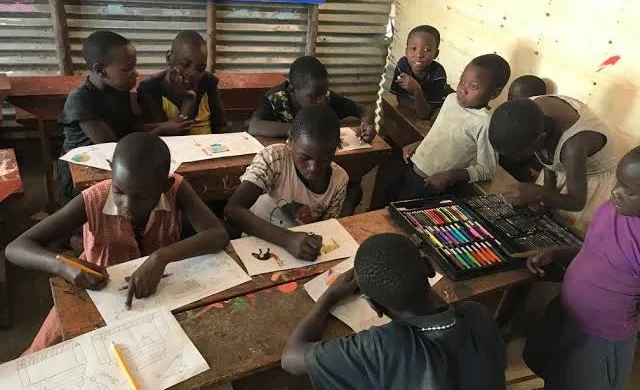
Fund Education in Rural Uganda. Education is the single most powerful tool for breaking the cycle of poverty, yet for thousands of children in rural Uganda, a classroom seat, a school uniform, or even a pencil remains out of reach. In the hills of the Kigezi region — home to breathtaking landscapes near Bwindi Impenetrable Forest and Mgahinga Gorilla National Park — poverty, orphanhood, and limited infrastructure keep many bright young minds locked out of the future they deserve.
At Kigezi Foundation, we believe every child, regardless of their background, deserves the chance to learn, grow, and thrive. This article explores why funding education in rural Uganda matters so much, the specific challenges rural learners face, and — most importantly — how you can be part of the solution.
Why Education Matters in Rural Uganda
Education is more than literacy and numeracy. It is the foundation for health, economic independence, and community resilience. A child who completes school is more likely to secure stable employment, make informed health decisions, and eventually lift their own family out of poverty. In rural Uganda, where subsistence farming remains the primary livelihood for most households, education offers an alternative path — one built on skills, opportunity, and choice rather than survival alone.
Studies from across East Africa consistently show that every additional year of schooling increases future earning potential and reduces vulnerability to exploitation, early marriage, and child labor. For orphaned and vulnerable children in districts like Kisoro, Kabale, and Rukungiri, education is often the only realistic route out of generational poverty. This is precisely why organizations like Kigezi Foundation exist — to make sure that a lack of money never becomes the reason a child’s education ends.
The Education Crisis Facing Rural Communities in the Kigezi Region
Despite Uganda’s Universal Primary Education (UPE) and Universal Secondary Education (USE) policies, “free” education rarely means free. Families are still expected to pay for uniforms, scholastic materials, examination fees, meals, and transport. For orphans and children from extremely poor households, these hidden costs are often insurmountable.
Several barriers compound the problem in rural Kigezi:
- Distance to school. Many children walk long distances over hilly terrain to reach the nearest primary or secondary school, discouraging regular attendance.
- Overcrowded and under-resourced classrooms. Many rural schools lack adequate desks, textbooks, and even permanent classroom blocks.
- Loss of parents or guardians. HIV/AIDS, illness, and poverty have left many children as orphans or in the care of aging grandparents who cannot afford school costs.
- Early dropout, especially for girls. Without support, many girls drop out before completing primary school due to early marriage, pregnancy, or the need to help at home.
- Limited transition to secondary and vocational training. Even children who complete primary school often cannot continue because secondary school fees and boarding costs are simply out of reach.
These are not abstract statistics — they are the daily reality for the children Kigezi Foundation works with. You can read more about the communities we serve on our About page, and see firsthand accounts in our recent feature on orphanages near Mgahinga National Park.
The Kigezi sub-region — spanning Kabale, Kisoro, Rukungiri, and Kanungu districts — is one of the most densely populated rural areas in Uganda. Land is fragmented into small family plots, and with limited industrial or formal-sector employment, most households depend entirely on subsistence agriculture. When a harvest fails, or a parent falls ill, school fees are almost always the first household expense to be cut. It is in this gap — between a family’s best intentions and their financial reality — that Kigezi Foundation steps in.
Understanding the Scale of the Orphan Crisis in Kigezi
Uganda is home to one of the largest populations of orphaned and vulnerable children in East Africa, a crisis driven historically by HIV/AIDS and compounded more recently by poverty-related illness, accidents, and family breakdown. In rural districts like Kisoro, many orphaned children are absorbed into extended families — often raised by elderly grandparents who are themselves struggling to meet basic needs, let alone cover school fees for multiple grandchildren.
Without external support, these children face a stark set of outcomes: dropping out to work on family land, migrating to urban centers in search of informal labor, or in the case of many young girls, entering early marriage as a coping mechanism for household poverty. Kigezi Foundation’s education programs exist specifically to interrupt this cycle before it starts, keeping children in the classroom during the years when their futures are still being shaped.
How Kigezi Foundation Is Bridging the Education Gap
Kigezi Foundation runs a range of programs specifically designed to keep vulnerable and orphaned children in school, from primary level all the way through secondary education and beyond. Our approach is holistic: we don’t just pay fees, we build the surrounding support system a child needs to succeed academically.
Our core education interventions include:
- School fee sponsorship for orphans and vulnerable children who would otherwise be forced to drop out.
- Provision of scholastic materials — books, uniforms, pens, and bags — that many families cannot afford.
- Mentorship programs pairing children with volunteers and staff who provide guidance, encouragement, and accountability.
- Infrastructure development, including our ongoing construction of new classroom blocks to relieve overcrowding.
- Community sensitization on the long-term value of keeping children, especially girls, in school.
You can explore the full scope of our work on our Projects page, where every initiative is listed alongside its funding progress and goals.
Orphan Education Support: Scholarships, Supplies, and Mentorship
One of our flagship initiatives is the Orphan Education Support Program, which directly funds school fees, scholastic materials, and mentorship for orphaned and vulnerable children across the Kigezi region. This program recognizes that education support cannot stop at tuition — a child also needs shoes, a uniform, exercise books, and someone checking in to make sure they are attending class and coping emotionally.
Through this program, sponsors and donors are matched with the direct impact of their giving: funds go straight toward tuition invoices, learning materials, and mentorship visits. Every contribution, no matter the size, keeps a specific child enrolled and progressing toward graduation. To see the current funding status of this program and contribute directly, visit our Donate page.
Building Better Schools: The Kinanira Secondary School Construction Project
Access to a functioning school building is often taken for granted, but in much of rural Kigezi, classrooms are overcrowded, poorly ventilated, or simply do not exist in sufficient numbers. Kigezi Foundation is currently raising funds to construct a three-level school block at Kinanira Secondary School, creating a safer, more inspiring learning environment for hundreds of students.
A well-built classroom block does more than shelter students from rain — it signals investment in a community’s future, attracts and retains qualified teachers, and allows schools to enroll more children without compromising the quality of instruction. This kind of infrastructure project has a multiplier effect: it doesn’t just help this year’s students, it benefits every class that follows for decades to come.
You can follow the progress of the Kinanira School Construction project and contribute toward the remaining balance through our Projects page, where fundraising milestones are updated regularly.
Beyond the Classroom: Vocational and Skills Training with Kenlink Institute
Academic education is critical, but not every child’s path leads to university — and that is perfectly fine. For many young people in rural Uganda, vocational and technical skills training offers a faster, more direct route to stable employment and self-reliance. This is why Kigezi Foundation values our partnership with Kenlink Institute (KCI Institute), a respected Uganda-based institute offering certificate, diploma, and short-course programs in fields ranging from tourism and hospitality to heavy machinery operation and business.
Kenlink Institute has generously supported our mission as a sponsor, helping bridge the gap between basic education and real-world employability for youth who complete their schooling through our programs. Their academic programs give graduates practical, industry-recognized qualifications that open doors in Uganda’s growing tourism and skilled-trades sectors — sectors that are especially relevant in a region as tourism-rich as Kigezi, bordering Bwindi and Mgahinga National Parks.
By supporting both classroom education and post-secondary vocational training, Kigezi Foundation and Kenlink Institute together create a more complete pathway: a child starts in a funded primary or secondary classroom and can eventually graduate into a certified vocational career, rather than facing unemployment after finishing school with no marketable skill. To learn more about their training philosophy and course offerings, visit Kenlink Institute’s official website.
Tourism That Gives Back: How Safaris Support Education in Kigezi
The Kigezi region is one of Uganda’s most spectacular tourism destinations, drawing travelers from around the world for mountain gorilla trekking, chimpanzee tracking, and breathtaking volcanic landscapes. What many visitors don’t realize is that responsible tourism in this region can directly fund education for local children.
Kigezi Foundation is proud to be supported by Pick and Transfer Safaris, a Uganda and Rwanda safari operator specializing in affordable gorilla trekking, wildlife safaris, and self-drive adventures across East Africa. Pick and Transfer Safaris channels a portion of its tour profits directly toward supporting orphans and education initiatives in the Kigezi community — proof that a traveler’s gorilla trekking adventure can leave a lasting, positive footprint far beyond the forest.
For travelers planning a trip to see the mountain gorillas of Bwindi or Mgahinga, booking with a partner like Pick and Transfer Safaris means your holiday budget contributes to something bigger than a bucket-list photo — it helps keep a child in school. This model of community-linked tourism is exactly the kind of sustainable partnership Kigezi Foundation seeks to grow, connecting visitors’ generosity directly to measurable educational outcomes in the communities they visit.
The Ripple Effect: How Educating One Child Transforms a Community
When Kigezi Foundation funds a child’s education, the benefits rarely stop with that individual. Educated young people become the teachers, nurses, entrepreneurs, and community leaders of tomorrow. They are far more likely to invest in their own children’s schooling, reducing generational poverty within a single family lineage.
Communities with higher education rates also see improvements in public health awareness, agricultural productivity, and civic participation. Girls who complete secondary school marry later, have healthier children, and are significantly less likely to experience domestic violence or extreme poverty in adulthood. In this way, every dollar donated toward a child’s school fees is an investment not just in one life, but in the long-term stability and prosperity of an entire village.
This ripple effect is why Kigezi Foundation frames education not as charity, but as sustainable development. Every classroom built, every scholarship funded, and every mentor assigned contributes to a stronger, more self-sufficient Kigezi region for generations to come.
Consider the practical, compounding math of a single sponsorship: a child who completes primary and secondary education is statistically far more likely to delay marriage, plan a smaller and healthier family, and earn a stable income. That income, in turn, allows them to pay school fees for their own children without outside help — effectively ending the cycle of dependency within one generation. Multiply that outcome across dozens or hundreds of sponsored children, and the long-term transformation of an entire sub-region becomes not just possible, but measurable.
This is also why Kigezi Foundation prioritizes partnerships that extend impact beyond a single donation. Working with organizations like Kenlink Institute ensures that once a child finishes secondary school, there is still a clear next step toward employment. Working with tourism partners like Pick and Transfer Safaris ensures that the region’s greatest economic asset — its extraordinary natural beauty — is converted into recurring, sustainable funding for local children rather than benefiting outside investors alone.
Challenges That Still Stand in the Way
Despite the progress made by organizations like Kigezi Foundation, significant challenges remain:
- Funding gaps. Many of our active projects, including the Kinanira School Construction and Orphan Education Support programs, remain only partially funded relative to their targets.
- Rising cost of living. Inflation in scholastic materials, transport, and food continues to increase the real cost of keeping a child in school.
- Limited awareness. Many potential donors and volunteers abroad are simply unaware of the scale of need in rural districts like Kisoro and Kabale, or don’t know how to give in a way that creates measurable, trackable impact.
- Sustainability. Short-term donations help in the moment, but long-term sponsorships and recurring gifts are what allow children to complete an entire education cycle, not just a single term.
Addressing these challenges requires consistent, community-level partnerships — the kind Kigezi Foundation has built with organizations like Kenlink Institute and Pick and Transfer Safaris, and the kind we hope to build with you.
How You Can Help Fund Education in Rural Uganda
There are several meaningful ways to support education for orphaned and vulnerable children in the Kigezi region:
1. Make a direct donation. Every contribution, whether one-time or recurring, goes directly toward school fees, scholastic materials, and infrastructure projects. Visit our Donate page to give securely online.
2. Sponsor a specific project. From the Orphan Education Support Program to the Kinanira Secondary School Construction, you can choose exactly which initiative your gift supports through our Projects page.
3. Travel with purpose. If you’re planning a gorilla trekking or wildlife safari in Uganda or Rwanda, consider booking with our partner Pick and Transfer Safaris, whose tours help fund our education programs.
4. Support vocational pathways. Encourage or sponsor a young graduate to pursue further training through Kenlink Institute, equipping them with practical, job-ready skills.
5. Spread awareness. Share our work, our children’s stories, and our funding needs with your own network. Awareness is often the first step toward sustained support.
Become a Volunteer and Make a Direct Impact
Beyond financial giving, Kigezi Foundation welcomes volunteers who want to contribute their time, skills, or expertise directly. Our volunteer program includes opportunities to support education initiatives, join medical outreach teams, engage with local communities, and participate in conservation-linked projects around the Kigezi region. Volunteering offers a uniquely immersive way to understand the day-to-day realities faced by the children and families we serve, while contributing hands-on support that complements our funded programs.
If you are interested in joining our team on the ground, visit our Become a Volunteer page to learn about current opportunities and how to apply.
Real Stories from the Ground
Numbers and statistics only tell part of the story. Behind every funded scholarship is a real child with a name, a family, and a future that looks brighter because of consistent support. We regularly share updates from the field, including profiles of the communities and children we serve, on our news and articles section. Recent features include our look at orphanages in Kisoro District and a practical guide on 10 ways you can support orphans in Uganda right now.
These stories are a reminder that sustainable change happens one child, one classroom, and one community at a time — and that transparency about where funds go is central to how Kigezi Foundation operates.
Frequently Asked Questions About Funding Education in Rural Uganda
Why is education so expensive in rural Uganda if primary school is supposed to be free? While government policy provides tuition-free primary and secondary education, families are still responsible for uniforms, scholastic materials, exam fees, meals, and in many cases transport or boarding costs. For orphaned or extremely poor households, these “hidden” costs are often the real barrier to attendance.
How does Kigezi Foundation choose which children to support? Our team works closely with local community leaders, guardians, and schools to identify orphaned and highly vulnerable children who are most at risk of dropping out due to financial hardship, prioritizing those with no reliable adult support system.
Can I sponsor a specific child or project? Yes. Donors can direct their giving toward specific active projects, such as the Orphan Education Support Program or the Kinanira Secondary School Construction, through our Donate page.
How is Kigezi Foundation connected to Kenlink Institute and Pick and Transfer Safaris? Kenlink Institute is a proud sponsor and supporter of our mission, offering vocational and technical training pathways for youth who complete their basic education. Pick and Transfer Safaris is a safari partner that channels a portion of its tour profits toward supporting our orphan and education programs, linking responsible tourism directly to community development.
Is my donation tax-deductible or trackable? Kigezi Foundation is committed to transparency in how funds are used. For specific documentation related to your donation, please reach out through our Contact page.
Conclusion: Every Child Deserves a Chance to Learn
Funding education in rural Uganda is not simply an act of charity — it is an investment in human potential, community resilience, and long-term development. In the Kigezi region, where poverty, orphanhood, and geographic isolation continue to threaten children’s access to school, organizations like Kigezi Foundation stand as a critical lifeline.
Through direct scholarships, infrastructure projects like the Kinanira Secondary School construction, and strategic partnerships with organizations like Kenlink Institute and Pick and Transfer Safaris, we are building a more complete, sustainable pathway from early education to meaningful employment for the next generation of Kigezi’s youth.
Whether you choose to donate, volunteer, sponsor a project, or simply travel with purpose, your support directly changes the trajectory of a child’s life. Visit Kigezi Foundation today to learn more, and join us in giving every child in rural Uganda the chance to learn, grow, and build a better future.