
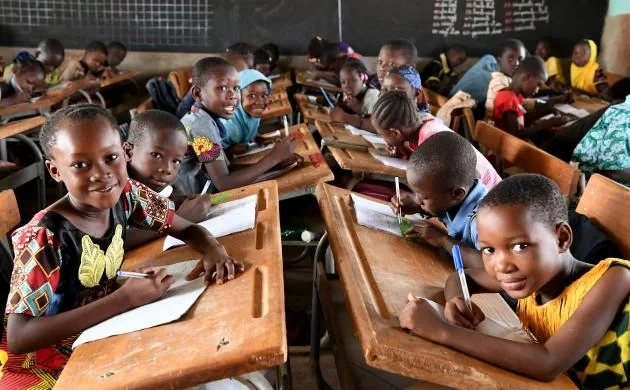
Support girls’ Education in Africa. Across Africa, girls face the steepest climb to an education. Poverty, early marriage, household chores, period poverty, and cultural expectations combine to push millions of girls out of school long before they reach secondary level. In rural Uganda’s Kigezi region, these barriers are not distant statistics — they are the daily reality facing girls in the communities Kigezi Foundation serves.
We believe a girl’s future should never be decided by her gender, her family’s income, or the distance she has to walk to reach a classroom. This article explores why supporting girls’ education in Africa matters so urgently, the specific obstacles girls face in rural Uganda, and the concrete ways you can help change the trajectory of a girl’s life — and, through her, an entire community’s future.
Why Girls’ Education Deserves Special Attention
Educating girls is one of the highest-return investments a community can make. Research from across sub-Saharan Africa consistently shows that when a girl completes secondary school, she marries later, has fewer and healthier children, earns significantly more over her lifetime, and reinvests a much larger share of her income back into her family than her male counterparts typically do. Economists often describe this as the “girl effect” — a single educated girl can lift not just herself, but her children and her community, out of generational poverty.
Yet globally, girls remain disproportionately locked out of school. In many rural African communities, when a household cannot afford to educate all its children, sons are prioritized over daughters. Girls are pulled out to help with domestic labor, married off young to reduce the number of mouths to feed, or simply deprioritized because their labor and eventual “bride price” are seen as more immediately valuable than years of schooling. Breaking this pattern requires deliberate, targeted support — which is exactly what girls’ education programs at Kigezi Foundation are designed to provide.
The Unique Barriers Girls Face in Rural Uganda
While both boys and girls in the Kigezi region face poverty-related barriers to education, girls encounter a distinct and often heavier set of obstacles:
- Early and forced marriage. In many rural households, marrying off a daughter is seen as an economic relief valve, removing one dependent from the family and often bringing in a bride price. This frequently ends a girl’s education permanently, sometimes as early as age 13 or 14.
- Teenage pregnancy. Without access to reliable information and support, teenage pregnancy remains one of the leading causes of school dropout among girls in rural Uganda. Ugandan policy technically allows girls to return to school after giving birth, but stigma, childcare demands, and financial strain mean many never do.
- Period poverty. Many rural schools lack private, sanitary facilities, and many families cannot afford sanitary products. Girls frequently miss several days of school every month, falling behind academically until they eventually stop attending altogether.
- Domestic labor burden. Girls are far more likely than boys to be pulled out of class, or kept home entirely, to fetch water, care for younger siblings, cook, and manage household chores — labor that is essential to family survival but devastating to consistent school attendance.
- Safety concerns on the journey to school. Long walks along isolated rural paths raise real safety risks for girls, and parents sometimes choose to keep daughters home rather than risk their safety during the commute.
- Orphanhood and guardianship gaps. Orphaned girls raised by elderly grandparents or distant relatives are especially vulnerable, often lacking a consistent adult advocate to prioritize their schooling over immediate household needs.
These compounding pressures mean that for every additional year of school, girls in rural Kigezi are statistically more likely than boys to drop out — unless deliberate intervention changes the equation. You can read more about the vulnerable children and communities we work with on our About page, and see real examples in our feature on orphanages in Kisoro District.
What makes these barriers especially difficult to address is that they rarely occur in isolation. A single girl may simultaneously be an orphan raised by an aging grandparent, responsible for fetching water and caring for younger siblings, and attending a school with no private sanitation facilities — any one of which could end her education, but together create a situation where dropout can feel almost inevitable without outside support. Effective intervention has to address the whole picture, not just the tuition bill.
The Economics of Educating a Daughter in a Subsistence Household
In much of rural Kigezi, family economics are built around subsistence farming on small, fragmented plots of land. In this context, every household member’s labor has an immediate, tangible value — fetching water, tending crops, caring for siblings — while the value of years of schooling feels distant and uncertain, especially for a daughter who, in many communities, is still expected to eventually marry into another household rather than remain to support her birth family in old age.
This short-term economic logic is precisely why targeted, external support is so effective: it removes the immediate financial trade-off parents face between sending a daughter to school today and meeting the household’s basic needs. When school fees, uniforms, and supplies are covered, families are far more likely to choose education, because the difficult calculation of “which child do we sacrifice for the sake of the others” is taken off the table entirely.
How Kigezi Foundation Supports Girls’ Education
Kigezi Foundation runs targeted programs designed to remove the specific barriers that push girls out of school, rather than applying a one-size-fits-all approach to education support. Our work with girls includes:
- School fee sponsorship, prioritizing orphaned girls and those from households at the highest risk of early marriage or dropout.
- Provision of sanitary supplies and hygiene education, helping to close the attendance gap caused by period poverty.
- Mentorship from female role models, connecting girls with mentors who have navigated similar challenges and completed their own education.
- Community sensitization on the value of girls’ education, working directly with parents and local leaders to shift attitudes around early marriage and household labor expectations.
- Support for returning teenage mothers, helping young mothers re-enroll in school and continue their education rather than being permanently written off.
- Safe transport and boarding support for girls who would otherwise face unsafe daily commutes to distant secondary schools.
Full details on our active initiatives, including current funding needs, are available on our Projects page.
Orphan Education Support: A Lifeline for Vulnerable Girls
Our Orphan Education Support Program places particular emphasis on girls, who make up a large share of the orphaned and vulnerable children in our care. Through this program, sponsors fund school fees, uniforms, sanitary supplies, and mentorship for girls who would otherwise be among the first pulled out of school when a household faces financial strain.
Because girls’ school dropout in rural Uganda is rarely caused by a single factor, this program is intentionally holistic — a sponsorship does not just cover tuition, it covers the surrounding support system that keeps a girl consistently attending class, term after term, until graduation. To directly fund a girl’s education through this program, visit our Donate page.
Building Safer, Better Schools for Girls: The Kinanira Secondary School Project
Physical infrastructure plays a direct role in whether girls stay in school. Overcrowded classrooms, a lack of private sanitation facilities, and unsafe or unwelcoming learning environments disproportionately push girls out, even when a family can technically afford the fees. Kigezi Foundation is currently raising funds to construct a new three-level classroom block at Kinanira Secondary School — a project that will directly improve the learning environment for hundreds of students, including many girls currently learning in overcrowded, under-resourced conditions.
A safer, better-equipped school is not a luxury — it is often the deciding factor in whether a girl’s family believes secondary education is worth the investment. You can track the funding progress of this project and contribute toward its completion through our Projects page.
From Classroom to Career: Vocational Pathways for Girls with Kenlink Institute
A girl who completes secondary school still needs a clear path to economic independence — otherwise, years of hard-won education can stall without a route into stable employment. This is where our partnership with Kenlink Institute (KCI Institute) becomes especially powerful for girls in our programs.
Kenlink Institute, a proud sponsor of Kigezi Foundation, offers certificate, diploma, and short-course programs in fields including tourism, hospitality, business, and skilled trades. These practical, industry-recognized qualifications are particularly transformative for young women, who often face additional barriers entering the formal job market compared to their male peers. By offering hands-on vocational training, Kenlink Institute helps girls who complete our sponsorship programs translate their education into real, marketable career skills — in a region where tourism, hospitality, and guiding are among the fastest-growing employment sectors.
This partnership reflects a core belief at Kigezi Foundation: supporting girls’ education cannot stop at a diploma. It must extend all the way to economic independence. Learn more about Kenlink Institute’s programs and mission at kenlinkinstitute.ac.ug.
Responsible Tourism, Real Impact: How Safaris Help Fund Girls’ Education
The Kigezi region’s world-famous mountain gorilla trekking and wildlife safaris are more than a tourism draw — they are a potential funding engine for girls’ education, when tourism revenue is intentionally channeled back into the community. Pick and Transfer Safaris, a Uganda and Rwanda safari operator specializing in affordable gorilla trekking and wildlife safaris, is a proud supporter of Kigezi Foundation, directing a portion of its tour profits toward our orphan and education programs.
For travelers booking a gorilla trekking adventure to Bwindi Impenetrable Forest or Mgahinga Gorilla National Park, choosing a community-linked operator like Pick and Transfer Safaris means your trip contributes directly to keeping a girl in school in the very region you’re visiting. It’s a model of tourism that benefits travelers, wildlife conservation, and local girls’ futures all at once — proof that a single safari booking can ripple far beyond the itinerary.
The Girl Effect: How One Educated Girl Changes an Entire Community
The evidence is consistent across Africa: educating a girl produces returns that extend well beyond her own life. An educated girl is more likely to delay marriage and childbearing, seek proper prenatal care, and raise healthier, better-educated children herself. She is more likely to reinvest her income directly into her family and community, and far less likely to fall into cycles of poverty, exploitation, or early widowhood.
This compounding impact is why Kigezi Foundation treats girls’ education not as one program among many, but as one of the highest-leverage interventions available to us. Every girl who completes her education becomes a mentor, a role model, and often a future advocate for other girls in her own family and village — creating a self-reinforcing cycle of opportunity that a single generation of support can set in motion for decades to come.
Supporting one girl’s education today doesn’t just change her story. It changes the story her daughters will one day be able to write for themselves.
Development economists have studied this “girl effect” extensively across sub-Saharan Africa, and the pattern holds consistently: communities with higher rates of girls completing secondary education see measurable improvements in child health outcomes, household income stability, and even local civic participation within a single generation. In practical terms, this means every scholarship funded today is not a one-time transaction, but the starting point of a decades-long chain of positive outcomes that Kigezi Foundation is uniquely positioned to help set in motion across the Kigezi region.
Challenges That Remain in Supporting Girls’ Education
Despite real progress, significant obstacles continue to threaten girls’ education in rural Uganda:
- Persistent funding gaps. Programs like Orphan Education Support and the Kinanira School Construction remain only partially funded relative to their targets, limiting how many girls we can currently reach.
- Deep-rooted cultural norms. Attitudes that prioritize sons’ education over daughters’, or view early marriage as a practical necessity, take sustained community engagement to shift.
- Economic shocks. A single bad harvest or medical emergency can instantly push a family to pull a daughter out of school, even after years of consistent attendance.
- Lack of consistent, long-term sponsorship. One-time donations help, but girls need reliable, multi-year support to make it all the way from primary school through secondary graduation without interruption.
- Limited awareness among international donors of how directly and measurably their support can change outcomes for girls in specific, identifiable communities like Kigezi.
How You Can Support Girls’ Education in Africa Today
There are several concrete ways to help close the gender gap in education across rural Uganda:
1. Sponsor a girl’s education directly. Donations through our Donate page fund school fees, uniforms, sanitary supplies, and mentorship for girls at the highest risk of dropping out.
2. Fund infrastructure that keeps girls in school. Contribute toward the Kinanira Secondary School Construction project via our Projects page, improving safety and learning conditions for girls region-wide.
3. Support vocational training for girls who graduate. Help a young woman continue her journey into a stable career through Kenlink Institute’s certificate and diploma programs.
4. Travel with purpose. Book a gorilla trekking or wildlife safari with Pick and Transfer Safaris, whose tour profits help fund our girls’ education initiatives.
5. Volunteer your time and skills. Join our team on the ground to mentor, teach, or support girls’ education programs directly.
6. Raise awareness. Share the stories and needs of girls in rural Uganda with your own community — increased visibility often leads directly to increased, sustained support.
Become a Volunteer and Champion Girls’ Education on the Ground
For those who want a more direct, hands-on role, Kigezi Foundation welcomes volunteers to support our education programs, mentor young girls, and engage with local communities on the ground in the Kigezi region. Volunteers play a vital role in our mentorship programs, offering the kind of consistent, caring presence that helps girls stay motivated and in school, especially those without a strong support system at home.
If you’re interested in volunteering directly with our girls’ education and community programs, visit our Become a Volunteer page to explore current opportunities.
Real Stories: Girls Whose Futures Were Protected
Behind every statistic is a girl with a name, a family, and dreams for her own future. We regularly share updates from the communities we serve, including the challenges and triumphs of the children in our programs. Explore recent features such as our look at orphanages near Mgahinga National Park and our practical guide on 10 ways you can support orphans in Uganda right now to see the human stories behind our work.
Frequently Asked Questions About Supporting Girls’ Education in Africa
Why do girls in rural Uganda drop out of school more than boys? Girls face a combination of pressures rarely faced by boys, including early marriage, teenage pregnancy, period poverty, and a heavier domestic labor burden at home. These compounding factors mean girls are statistically more likely to be pulled out of school when a family faces financial strain.
How does Kigezi Foundation identify girls most in need of support? We work closely with local community leaders, guardians, and schools to identify orphaned and highly vulnerable girls, prioritizing those at the greatest risk of early marriage, dropout, or lacking a reliable adult advocate for their education.
Can I sponsor a specific girl or program? Yes. Donors can direct their support toward specific initiatives, including our Orphan Education Support Program or the Kinanira Secondary School Construction, through our Donate page.
What happens after a sponsored girl finishes secondary school? Many girls transition into vocational or technical training through our partner Kenlink Institute, gaining practical, job-ready skills that support long-term economic independence beyond the classroom.
How is tourism connected to girls’ education funding? Our partner Pick and Transfer Safaris directs a portion of its Uganda and Rwanda safari tour profits toward supporting orphans and education programs in the Kigezi region, linking responsible tourism directly to girls’ educational outcomes.
How can I get more information or ask questions before donating? You’re welcome to reach out anytime through our Contact page.
Conclusion: Every Girl Deserves a Future Written by Her Own Hand
Supporting girls’ education in Africa is one of the most effective, high-leverage ways to break cycles of poverty, early marriage, and inequality — not just for one girl, but for the generations that follow her. In the Kigezi region of rural Uganda, where cultural, economic, and infrastructural barriers still push too many girls out of the classroom, targeted support makes the difference between a life defined by circumstance and a life defined by choice.
Through direct sponsorship, safer school infrastructure, and strategic partnerships with organizations like Kenlink Institute and Pick and Transfer Safaris, Kigezi Foundation is building a complete pathway for girls — from their first day in a funded classroom to a stable, skilled career of their own choosing.
Whether you choose to sponsor a girl’s education, fund a classroom, volunteer on the ground, or simply travel with purpose, your support directly changes what becomes possible for a girl in rural Uganda. Visit Kigezi Foundation today and help ensure that every girl gets the chance to write her own future.