
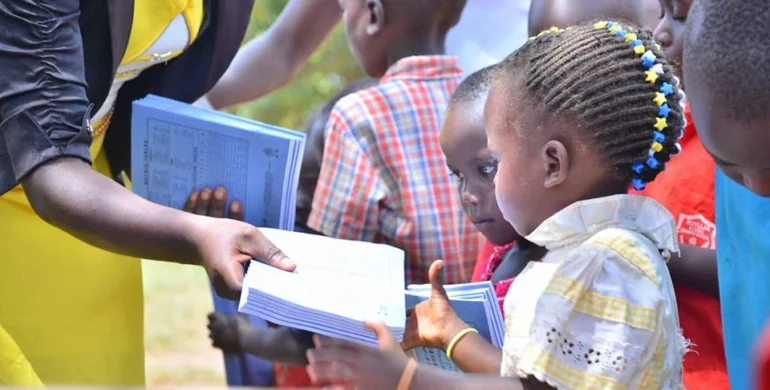
How to donate to poor children in Uganda. Every day, thousands of children across Uganda wake up without enough food, without school fees, and without the basic healthcare that most of the world takes for granted. Yet every day, ordinary people around the globe change that reality — one donation, one sponsorship, one act of kindness at a time. If you have ever asked yourself “how can I actually help a poor child in Uganda in a way that makes a real difference?” — this guide was written for you.
At Kigezi Foundation, we work directly with orphaned, vulnerable, and disadvantaged children in the Kigezi sub-region of southwestern Uganda. This article walks you through exactly how child poverty affects communities here, the most effective and trustworthy ways to donate, what your money actually funds, and how you can get started today — whether you can give $10 or $10,000.
Understanding Child Poverty in Uganda Today
Uganda is a young country in every sense — more than 48% of its population is under the age of 15. That youthful energy is also where the country’s greatest vulnerability lies. Many children lose one or both parents to illness, accidents, or poverty-related causes, and are left in the care of aging grandparents, distant relatives, or, in the hardest cases, no one at all.
In rural districts like Kisoro, Kabale, and the areas surrounding Mgahinga National Park, poverty is compounded by geography. Families often depend on small-scale subsistence farming, and a single failed harvest can mean a child drops out of school or goes without a proper meal for days. Healthcare facilities are scarce, and the nearest clinic may be hours away on foot. These are the exact communities where Kigezi Foundation focuses its work, and where your donation goes furthest.
Understanding this context matters because it shapes how you should give. A one-time donation can provide emergency relief, but sustainable change — the kind that breaks the cycle of poverty for a child and their future family — usually comes from consistent, structured support such as school sponsorship or ongoing project funding.
Beyond the statistics, it helps to understand the daily realities many of these children face. A typical day for a vulnerable child in rural Kigezi might start with a long walk to fetch water before school, followed by several kilometers on foot to reach the nearest classroom, and end with whatever food the household can gather for the evening. School dropout rates spike sharply around the transition from primary to secondary school, largely because secondary tuition, uniforms, and boarding costs become unaffordable for guardians already stretched thin. This is precisely the gap that thoughtful, targeted donations can close — the difference between a child finishing Primary Seven and a child continuing on toward further education or vocational training years later.
Why the Kigezi Region Needs Your Support
The Kigezi region, nestled among Uganda’s famous “Switzerland of Africa” hills near Bwindi and Mgahinga, is breathtakingly beautiful — but beauty does not pay school fees or buy medicine. Many orphanages and vulnerable households in this area operate with minimal government support, relying almost entirely on the generosity of donors, volunteers, and partner organizations to survive.
Our recent article on orphanages near Mgahinga National Park explores in detail how conservation tourism and child welfare intersect in this region, and why local orphanages often struggle to access consistent funding despite being surrounded by a thriving tourism economy. Similarly, our piece on orphanages in Kisoro District highlights specific gaps in shelter, nutrition, and education that donors can directly help close.
By supporting Kigezi Foundation, you are not funding an abstract cause — you are funding a specific, well-documented, geographically concentrated effort where every dollar has an outsized impact compared to giving in wealthier or more saturated regions.
Who Are the Children You’ll Be Helping?
The children supported through Kigezi Foundation programs generally fall into a few overlapping categories:
- Full orphans — children who have lost both parents and are being raised by extended family or community caregivers.
- Vulnerable children — those living with a single parent, elderly grandparent, or guardian who cannot afford school fees, food, or medical care.
- Children with disabilities — who often face additional barriers to education and healthcare in rural Uganda.
- Children in child-headed households — a heartbreaking but real category where older siblings, sometimes as young as 12 or 13, are raising their younger brothers and sisters alone.
Each child has a name, a story, and dreams for the future — to become a nurse, a teacher, a mechanic, a tour guide. Your donation is the bridge between where they are today and where those dreams can take them.
Ways to Donate to Poor Children in Uganda
There is no single “right” way to give — the best method depends on your budget, your interests, and how hands-on you want to be. Below are the most effective and commonly used options.
1. One-Time Monetary Donations
The simplest and most flexible way to help is a direct financial donation. Cash donations allow Kigezi Foundation to allocate funds exactly where the need is greatest at any given moment — whether that’s emergency food relief, medical treatment, or covering an unexpected school fee deadline. You can make a secure one-time donation directly through the Kigezi Foundation donation page.
2. Monthly or Recurring Giving
Recurring donations — even small ones like $15 or $20 a month — are often more valuable to a charity than a single large gift, because they allow long-term planning. Recurring donors essentially guarantee that a child’s school fees will be paid next term, not just this one. If you want your generosity to have compounding impact, consider setting up a recurring gift through the official donation portal.
3. Sponsor a Child’s Education
Education sponsorship is one of the most rewarding ways to give because it creates a direct, ongoing connection between you and a specific child’s journey. Sponsorship typically covers tuition, scholastic materials, uniforms, and sometimes mentorship. Our article, 10 Ways You Can Support Orphans in Uganda Right Now, breaks down exactly what a sponsorship package includes and how funds are tracked.
4. Fund a Specific Project
If you prefer to see your donation tied to a tangible outcome, you can contribute toward one of our active current projects, such as the ongoing Kinanira Secondary School construction, the Orphan Education Support program, or the Healthcare Outreach initiative serving vulnerable families across the Kigezi region. Each project page shows exactly how much has been raised and how much is still needed, so you can see your contribution’s real-time impact.
5. In-Kind Donations
Not everyone is in a position to give cash, and that’s okay. In-kind donations of school supplies, clothing, mosquito nets, sanitary products, and basic medical supplies are always needed. If you are planning a visit to Uganda or know someone who is, reach out through our contact page to arrange delivery logistics.
6. Corporate and Institutional Partnerships
Businesses, schools, and training institutions can partner with Kigezi Foundation on a larger scale — sponsoring an entire classroom, funding a clean water project, or providing skills training pipelines for older children transitioning out of the orphanage system. A great example of this kind of partnership is our relationship with KCI Institute (Kenlink Institute), a vocational training institution in Kampala that has generously supported our mission and offers a pathway for the young people we serve to pursue further vocational and professional education once they complete secondary school.
How to Donate Online Safely and Securely
Trust is everything when it comes to charitable giving, especially internationally. Here’s how to donate to Kigezi Foundation with confidence:
- Visit the official Kigezi Foundation donation page directly rather than clicking links from unfamiliar emails or social media messages.
- Choose your donation method — the Foundation processes secure donations through its payment partner, allowing card and mobile-money contributions.
- Select whether you want a one-time gift or a recurring monthly contribution.
- Keep your payment confirmation for your records, and feel free to request an official donation acknowledgment through the contact page.
- Follow Kigezi Foundation’s news and updates to see how funds are being used across active projects.
As a general rule for giving anywhere in the world, always verify a charity’s registration, look for transparent project reporting, and be cautious of unsolicited requests for wire transfers or gift cards — legitimate organizations will always direct you to an official, secure donation channel.
Volunteering: A Different Kind of Donation
Money is not the only resource that changes lives — time, skills, and presence matter too. Kigezi Foundation welcomes volunteers in medical outreach, community education, conservation work, and general child support. If you are a teacher, nurse, social worker, or simply someone with a willing heart and a few weeks to spare, consider joining our volunteer program.
Volunteers often describe the experience as transformative — not just for the children they serve, but for their own understanding of resilience, community, and gratitude. Many former volunteers go on to become long-term monthly donors once they’ve seen the work firsthand.
The Role of Education and Skills Training Partners
Getting a child through primary and secondary school is a critical first step, but true transformation happens when that child can go on to build a sustainable career. This is where our valued partner, KCI Institute, plays such an important role.
KCI Institute, based in Kampala, offers practical certificate, diploma, and short-course training in fields ranging from tourism and hospitality to heavy machinery operation and business. For the older children and young adults who graduate from the programs Kigezi Foundation supports, institutions like KCI Institute’s academic programs provide a realistic, hands-on pathway into stable employment — turning a rescued childhood into an independent, self-sufficient adulthood.
We are proud to call KCI Institute a supporter and partner of our mission, and we encourage donors who are also interested in vocational education and workforce development in Uganda to learn more by visiting their admissions page.
Where Your Donation Actually Goes
Transparency builds trust, and trust is what keeps a charity’s mission alive. Here is a general breakdown of how donations to Kigezi Foundation are typically allocated:
- Education — tuition, scholastic materials, uniforms, and examination fees.
- Healthcare — medical camps, treatment for common illnesses, and emergency care.
- Shelter and basic needs — food, clothing, and safe housing support for vulnerable children.
- Infrastructure projects — such as school block construction and clean water access.
- Administrative and operational costs — kept intentionally lean so that the majority of every donation reaches the children directly.
You can review live progress on current initiatives, including funding raised versus funding needed, on the projects page.
Real Stories: Lives Changed Through Giving
Behind every statistic is a real child. Donors who have supported Kigezi Foundation over the years often share how meaningful it is to receive updates and photos showing a sponsored child progressing through school, or a family finally accessing the medical care they needed. One long-time funder shared that after a year of monthly giving, they were able to visit and see the children in person — describing the experience as feeling like an extension of their own family.
These relationships are part of what makes giving to a grassroots, regionally focused organization like Kigezi Foundation so different from donating to a large, faceless international charity. Your contribution is not lost in a massive budget — it is felt, tracked, and remembered.
The Long-Term Impact of Consistent Giving
It’s worth pausing to consider what “impact” really means in the context of child poverty. A single meal or one term of school fees can provide crucial short-term relief, but the most meaningful transformations happen over years, not days. A child who receives consistent support from Primary One all the way through secondary school — and eventually into vocational or professional training — has a fundamentally different life trajectory than one whose education is interrupted by an unpaid school fee balance.
This is why Kigezi Foundation encourages donors to think beyond the single transaction and consider the multi-year journey of the children they support. A donor who commits to monthly giving for even two or three years can realistically carry a single child from primary school through the critical secondary years, positioning them for further education, a trade certification, or stable employment. Multiply that by dozens of sponsors, and entire communities begin to shift — fewer child-headed households, fewer preventable illnesses, and a generation of young adults equipped to support their own families and, eventually, give back themselves.
This ripple effect is also why partnerships matter so much. Organizations that focus purely on charity without a pathway to self-sufficiency risk creating long-term dependency. That’s why Kigezi Foundation actively works alongside training-focused partners such as KCI Institute — so that the story doesn’t end at “child completes school,” but continues toward “young adult builds a career.”
Seasonal and Holiday Giving
Many donors choose to give around specific times of year — Christmas, Easter, back-to-school season in late January and early February, or during global giving events. Seasonal donations can be especially impactful in Uganda, where the start of each school term (typically February, May, and September) creates a predictable spike in financial pressure for guardians who must pay tuition and buy uniforms and supplies all at once.
If you want your gift to have maximum, immediate effect, consider timing a donation to coincide with the start of a school term through the donation page, or contributing toward holiday meal and gift programs that bring extra joy to children who otherwise experience the festive season without celebration. Even a modest gift, timed well, can relieve enormous stress for a struggling household.
Common Mistakes to Avoid When Donating
Even well-meaning donors sometimes make choices that reduce the impact of their generosity. Keep these tips in mind:
- Avoid one-off physical donations without coordination. Sending items without first checking current needs can result in duplication or unusable goods. Always check with the contact page first.
- Don’t assume all charities are equal. Look for organizations with a clear regional focus, transparent reporting, and verifiable projects — like Kigezi Foundation’s published project funding progress.
- Don’t underestimate small, recurring gifts. A steady $10 a month often does more good than a single $100 gift, because it allows long-term planning for school terms and medical needs.
- Don’t skip the follow-up. Ask how your donation was used. A reputable charity will be happy to tell you.
Tips for First-Time Donors
If this is your first time supporting a cause like this, here is a simple roadmap:
- Start small and build trust. Make a modest one-time donation through the donation page to see how the process works.
- Read the Foundation’s project updates and blog to understand where the greatest current needs are.
- Decide on your giving style — one-time, recurring, project-specific, or in-kind.
- Consider sponsorship if you want an ongoing, personal connection to a child’s progress.
- Share the mission with friends, family, or your workplace — awareness is itself a form of giving.
- Stay engaged by following updates, and consider volunteering if you are ever able to visit Uganda.
Frequently Asked Questions About Donating to Children in Uganda
Is it safe to donate online to a Ugandan charity? Yes, as long as you use the organization’s official, verified donation channel. Kigezi Foundation processes donations securely through its official donation page.
Can I choose exactly which project my donation supports? Yes. You can direct your gift toward a specific initiative listed on the projects page, such as school construction, education support, or healthcare outreach.
Do I need to donate a large amount to make a difference? No. Small, consistent donations often have more long-term impact than large one-time gifts, because they allow the Foundation to plan ahead for recurring needs like school fees.
How can I visit or volunteer with the children I’m supporting? You can apply through the volunteer program page, which outlines current opportunities in medical outreach, education, and community engagement.
What happens to older children once they finish school? Many transition into vocational or professional training through partner institutions such as KCI Institute, which offers practical career-focused programs to help them become self-sufficient.
How do I contact the Foundation with questions? You can reach the team anytime through the contact page or by phone and email listed there.
How to Get Started Today
Poverty in the Kigezi region of Uganda is real, but so is the power of collective generosity. Whether you choose to make a single donation, sponsor a child’s education, fund a specific project, or simply share this article with someone who might care, you are part of the solution.
Ready to make a difference right now? Visit the Kigezi Foundation donation page to give today, explore our current projects to see exactly where the need is greatest, or reach out through our contact page if you have questions before you give.
And if you’re passionate about education and workforce development as a long-term solution to poverty, take a moment to learn more about our valued partner and supporter, KCI Institute, whose vocational training programs help the children we support build lasting, independent futures.
Change of this kind rarely happens through grand gestures alone — it happens through hundreds of ordinary people deciding, quietly and consistently, that a child they may never meet in person still deserves a fair chance at life. That decision, repeated month after month by donors around the world, is what keeps classrooms open, clinics staffed, and hope alive in the villages of Kigezi.
Every child deserves hope. Every donation — no matter the size — is a step toward giving it to them.