
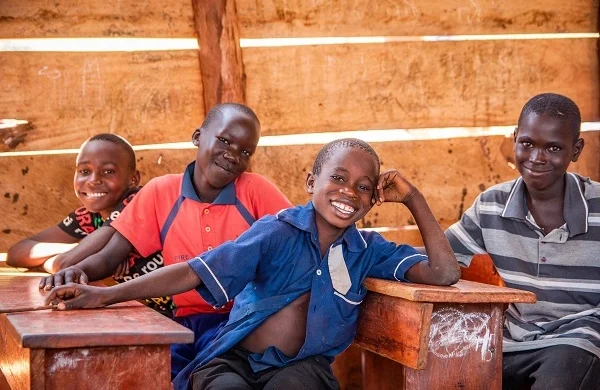
Sponsor a child in Uganda. Of all the ways to help a vulnerable child, few create a bond as personal — or an impact as lasting — as sponsorship. Sponsoring a child in Uganda means committing to walk alongside one specific child’s journey, term after term, year after year, as they move from uncertainty toward a stable, hopeful future. If you’ve been considering child sponsorship but aren’t sure how it works, what it costs, or what real difference it makes, this guide covers everything you need to know.
At Kigezi Foundation, our Orphan Education Support program connects sponsors with orphaned and vulnerable children across the Kigezi region of southwestern Uganda, near Bwindi and Mgahinga National Park. This article explains what sponsorship actually involves, how your contribution is used, and how to get started.
What Does It Mean to Sponsor a Child?
Child sponsorship is a form of ongoing, structured giving in which a donor commits to regularly supporting a specific child’s education, health, and basic needs — typically through a monthly or termly contribution. Unlike a one-time donation, sponsorship is built around continuity: the same child benefits from your support consistently, term after term, rather than receiving a single isolated gift.
This continuity matters enormously in a country like Uganda, where school terms run on a predictable calendar (typically starting in February, May, and September) and unpaid fees at the start of any single term can mean a child is sent home or forced to drop out entirely. A sponsor essentially guarantees that this disruption won’t happen — removing one of the single biggest threats to a vulnerable child’s education.
Why Sponsorship Matters More Than a One-Time Gift
A one-time donation can provide crucial emergency relief, but sponsorship changes the entire trajectory of a child’s life by removing uncertainty from the equation. Consider the difference:
- A one-time gift might cover a single term’s school fees, but leaves the next term’s funding unresolved.
- Sponsorship ensures a child’s education continues uninterrupted from one term to the next, allowing them to progress steadily through primary school, into secondary school, and eventually toward further training or employment.
This predictability also allows Kigezi Foundation staff to plan ahead — securing school placements, ordering uniforms and supplies in advance, and coordinating medical checkups on a consistent schedule, rather than scrambling to respond to funding gaps as they arise.
Who Are the Children Waiting for Sponsors?
Children supported through our Orphan Education Support program generally fall into several overlapping situations:
- Full orphans, who have lost both parents and are being raised by extended family, community caregivers, or live in residential care.
- Vulnerable children, living with a single parent or elderly grandparent who cannot afford school fees, food, or medical care.
- Children with disabilities, who often face compounded barriers to accessing education in rural Uganda.
- Children in child-headed households, where older siblings — sometimes barely teenagers themselves — are raising younger brothers and sisters alone.
Each child has a name, a personality, and specific dreams for their future — many hope to become teachers, nurses, mechanics, or tour guides. Sponsorship gives them the stability to actually pursue those dreams instead of having their education repeatedly interrupted by financial crisis.
What Does Sponsorship Typically Cover?
A sponsorship contribution is generally allocated across several core categories, depending on the child’s specific situation and school level:
- Tuition and school fees, covering primary or secondary education.
- Scholastic materials, including exercise books, pens, and textbooks.
- School uniforms and shoes, required by most Ugandan schools.
- Examination fees, necessary to progress through the national education system.
- Basic healthcare access, including checkups and treatment for common illnesses.
- Mentorship and pastoral support, helping a child navigate challenges beyond the classroom.
You can support this program directly, or direct a contribution toward it specifically, through our donation page.
How Much Does It Cost to Sponsor a Child in Uganda?
Sponsorship costs vary depending on a child’s school level and specific needs, since secondary education, boarding costs, and specialized care for children with disabilities typically require a higher monthly contribution than primary-level support. Rather than publishing a single fixed figure that may not reflect a specific child’s actual situation, we encourage prospective sponsors to reach out through our contact page, where our team can walk you through current sponsorship needs and match you with a contribution level that fits your budget.
Many sponsors choose to give monthly, since smaller, consistent contributions are often easier to sustain long-term than a single large annual payment — and consistency is exactly what makes sponsorship effective in the first place.
How the Sponsorship Process Works
While specific steps can vary, most child sponsorship relationships through Kigezi Foundation follow a similar path:
- Initial inquiry — reach out through the contact page to express interest in sponsoring a child.
- Matching — our team identifies a child whose current needs align with your intended level of support.
- Commitment — you set up a recurring contribution through the secure donation page, or arrange a term-by-term payment schedule.
- Ongoing updates — sponsors typically receive periodic updates on the child’s progress, including school performance and general wellbeing.
- Optional deeper engagement — many sponsors eventually choose to visit in person or volunteer directly with the community they’re supporting.
This structure ensures that sponsorship isn’t just a transaction — it’s the beginning of an ongoing relationship between a donor and a specific child’s future.
What Happens When a Sponsored Child Finishes School?
One of the most important — and often overlooked — parts of sponsorship is what happens after a child completes secondary school. Education alone doesn’t guarantee economic independence; it needs to connect to a real pathway toward employment or further study.
This is where our partnership with KCI Institute becomes especially valuable. KCI Institute, based in Kampala, offers practical certificate and diploma programs across fields such as tourism, hospitality, business, and heavy machinery operation. For sponsored children who complete their secondary education, KCI Institute’s academic programs provide a realistic, hands-on route into stable employment — turning years of sponsorship into genuine, lasting independence rather than support that simply ends at graduation.
Sponsors interested specifically in funding this next stage of a child’s journey can ask about post-secondary sponsorship options through the contact page.
Sponsorship vs. Other Ways to Give
If you’re deciding between sponsorship and other forms of giving, it helps to understand how they compare:
- Sponsorship is best if you want an ongoing, personal connection to one specific child’s progress over multiple years.
- One-time or recurring general donations through the donation page are best if you want maximum flexibility, allowing funds to go wherever the need is greatest at any given moment.
- Project-specific giving, such as contributing toward the Kinanira Secondary School construction or Healthcare Outreach initiative, is best if you’re more interested in shared community infrastructure than an individual sponsorship relationship.
- In-kind donations, such as school supplies or clothing, complement sponsorship well for donors who want to contribute tangible items alongside financial support.
- Volunteering through our volunteer program allows sponsors — or anyone interested in supporting children directly — to contribute time and expertise in addition to funding.
Many long-term supporters choose to combine sponsorship with occasional project-specific gifts, giving both a personal connection to one child and a broader contribution to the community that child lives in.
Common Questions New Sponsors Ask
Prospective sponsors often want reassurance about a few key things before committing:
- Will I really know how my sponsorship is being used? Yes — sponsors receive periodic updates on their child’s education and general progress, and can always request further detail through the contact page.
- What if I can only commit for a limited time? Any length of sponsorship helps. Even a year of consistent support can carry a child through a critical stretch of their education, and the Foundation can help transition a child to a new sponsor if circumstances change.
- Can I sponsor more than one child, or a sibling group? Yes, and many donors choose to do exactly this, particularly for child-headed households where siblings are being raised together.
- Is it possible to visit the child I sponsor? Many sponsors do visit over time, often coordinating a trip alongside our volunteer program.
Tips for Becoming an Effective Sponsor
If you’re ready to begin, keep these principles in mind to make your sponsorship as impactful as possible:
- Commit to consistency over size. A modest, reliable monthly contribution is more valuable than an inconsistent larger one, since it allows for accurate planning around school terms.
- Stay engaged with updates. Reading and responding to progress reports helps sustain the relationship and lets our team know your continued interest.
- Ask questions early. Use the contact page to clarify exactly what your contribution covers before you commit.
- Think beyond graduation. Consider whether you’d like to support a child’s transition into vocational training, such as programs offered through KCI Institute, once secondary school is complete.
- Consider combining sponsorship with community giving. A contribution toward ongoing projects strengthens the broader environment your sponsored child grows up in.
The Relationship Behind the Contribution
Numbers and program structure only tell part of the story. Sponsors who stay involved over multiple years often describe the relationship as one of the most meaningful they’ve built with someone they’ve never met in person — following a child’s report cards, hearing about a favorite subject or a new friendship, and eventually watching a shy primary school student grow into a confident secondary school graduate with plans of their own.
This relational dimension is part of why sponsorship tends to keep donors engaged far longer than a one-time gift ever could. It’s not just a recurring charge on a bank statement — it becomes a genuine thread of connection between a sponsor’s life and a child’s unfolding future. Many sponsors describe checking in on updates the way they’d check in on a family member’s news, and some eventually plan a visit specifically to meet the child they’ve supported for years, often coordinating that trip through our volunteer program.
For the children themselves, knowing that a specific person somewhere in the world is invested in their progress — not just an anonymous fund, but a real sponsor following their journey — often provides a sense of stability and encouragement that goes beyond what the financial support alone would suggest.
Frequently Asked Questions About Sponsoring a Child in Uganda
How is a sponsored child selected and matched with me? Our team identifies children with active, documented needs and matches them based on the level of support a sponsor is able to provide. You can start this process through the contact page.
Is sponsorship a monthly commitment, or can I pay per term? Both options are typically available. Monthly giving through the donation page is common, but term-by-term arrangements can also be discussed directly with our team.
What is the difference between sponsoring a child and donating to a project? Sponsorship supports one specific child’s ongoing education and wellbeing, while project donations — such as toward the Kinanira Secondary School construction — fund shared community infrastructure benefiting many children at once.
Can I stop sponsoring if my circumstances change? Yes. While consistency is ideal, life circumstances change, and our team can work with you to responsibly transition a child to continued support if you’re no longer able to sponsor.
Do sponsors get updates on their child’s progress? Yes, sponsors typically receive periodic updates on academic progress and general wellbeing, and can request more detail anytime through the contact page.
What happens after a sponsored child finishes secondary school? Many transition into practical vocational training through partner institutions such as KCI Institute, giving them a genuine pathway toward independent, stable careers.
Begin Sponsoring a Child Today
Sponsoring a child in Uganda is one of the most meaningful, lasting ways to change a life — not through a single gesture, but through years of consistent presence and support. Explore our Orphan Education Support initiative to learn more about current needs, get started with a secure contribution through the donation page, or reach out through our contact page to begin the sponsorship matching process.
And if you’re thinking about a sponsored child’s future well beyond school, take a moment to learn more about our training partner, KCI Institute, whose vocational programs help transform years of sponsorship into a genuinely independent adult future.
A single sponsorship can carry a child through their entire education. Few gifts last that long — or matter that much.