
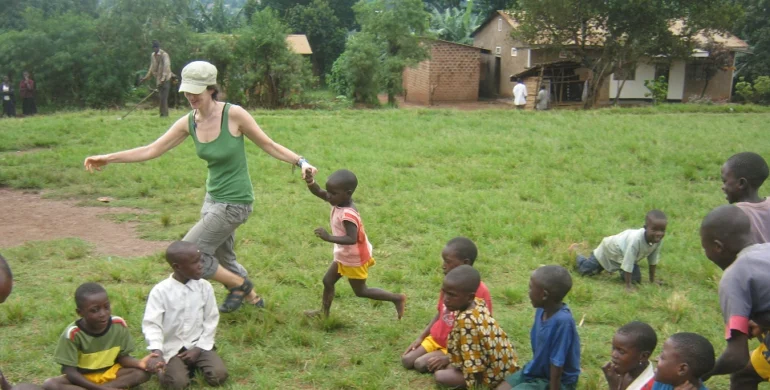
Support community projects in Uganda. Individual acts of generosity matter, but some of the deepest, most lasting change happens when a community comes together around a shared project — a school block that will educate hundreds of children for decades, a healthcare outreach program that reaches entire villages, or a clean water source that changes daily life for every household nearby. If you’ve been searching for how to support community projects in Uganda in a way that creates real, measurable, long-term impact, this guide will walk you through exactly how that kind of giving works.
At Kigezi Foundation, our work goes beyond individual child sponsorship — we run and support structural, community-wide projects across the Kigezi region of southwestern Uganda, from school construction to healthcare outreach. This article explains what community-level development actually looks like on the ground, why it matters alongside individual giving, and how you can get directly involved.
What Are “Community Projects” and Why Do They Matter?
A community project is any initiative designed to benefit an entire village, school, or district — rather than a single household or individual. Where a child sponsorship or an individual donation addresses one family’s immediate needs, a community project addresses the shared infrastructure and systems that an entire population depends on: schools, clinics, water sources, and economic opportunity.
Community projects matter because poverty rarely affects just one household in isolation — it’s usually tied to shared, structural gaps. A village without a nearby secondary school affects every family in it. A community without a functioning health outreach program leaves every household vulnerable to preventable illness. By funding shared infrastructure and systems, a single donation can ripple outward to benefit hundreds, sometimes thousands, of people well beyond the initial gift.
This is why organizations like Kigezi Foundation intentionally balance two types of giving: direct support for individual orphaned and vulnerable children, and larger community-wide projects that strengthen the systems those children — and their entire communities — depend on.
Types of Community Projects Worth Supporting in Uganda
Community development work in Uganda spans several major categories, each addressing a different structural gap.
Education Infrastructure
School construction projects — new classroom blocks, dormitories, libraries, and sanitation facilities — remain some of the highest-impact community investments available. A single school building can serve students for generations, far outlasting the initial donation that funded it. Our own Kinanira Secondary School Construction project is a direct example: we’re raising funds to build a three-level school block that will provide an improved, inspiring learning environment for students who currently study in overcrowded or inadequate facilities.
Healthcare Outreach and Medical Camps
Community healthcare projects bring medical services directly to villages that lack easy access to clinics or hospitals. These programs often combine general checkups, vaccinations, treatment for common illnesses, and health education in a single outreach event, reaching far more people per dollar spent than individual medical support alone. Our Healthcare Outreach in the Kigezi Region initiative organizes exactly this kind of outreach for vulnerable communities and individuals across the area.
Clean Water and Sanitation
Access to clean water remains one of the most fundamental — and most transformative — community investments possible. Water projects reduce disease, free up hours of daily time (often spent by children and women walking long distances to fetch water), and directly improve school attendance, since children no longer need to spend mornings collecting water before class.
Agriculture and Food Security
Community agricultural projects — shared farmland, kitchen gardens, seed distribution, and farming training — build long-term food security rather than one-time relief. These projects are particularly effective when paired with education, since well-nourished children attend and perform better in school.
Skills Training and Economic Development
Community-wide economic development often centers on vocational and skills training, helping young adults and parents build sustainable livelihoods. This is where partnerships with training institutions become especially valuable — organizations like KCI Institute provide practical certificate and diploma programs in fields ranging from tourism to business to heavy machinery operation, giving community members a genuine pathway to stable employment once foundational needs like education and healthcare are met.
How Kigezi Foundation’s Community Projects Work
Every active community project supported by Kigezi Foundation is published transparently, with clear funding goals and progress updates, on our projects page. This includes:
- Kinanira Sec. School Construction — building a three-level school block to expand and improve the learning environment for local students.
- Orphan Education Support — funding scholarships, school supplies, and mentorship for vulnerable children across the region.
- Healthcare Outreach in the Kigezi Region — organizing medical camps and ongoing health support for vulnerable communities and individuals.
Because each project shows exactly how much has been raised and how much is still needed, donors can see precisely where their contribution fits into the bigger picture — whether that’s a small gift that helps close the final funding gap, or a larger contribution that accelerates a project’s timeline significantly.
Ways to Support Community Projects
There are several effective ways to get involved with community-level development work in Uganda, depending on your resources, time, and preferred level of involvement.
1. Direct Financial Contributions
The most straightforward way to support a community project is a direct donation earmarked for a specific initiative. You can contribute toward any current project through our secure donation page, specifying whether you’d like your gift directed toward school construction, healthcare outreach, or education support.
2. Sponsoring a Specific Milestone
Larger community projects, like school construction, are often broken into achievable milestones — clearing land, laying a foundation, completing a classroom block, installing a roof. Donors who want to see a concrete, specific outcome from their generosity can ask about sponsoring a particular milestone through our contact page.
3. Corporate and Group Sponsorships
Businesses, schools, faith groups, and civic organizations can partner with Kigezi Foundation to fund an entire component of a community project — for example, sponsoring a full classroom, a water tank, or a term of a healthcare outreach program. Group sponsorships often create a meaningful shared sense of purpose, and many organizations choose to make this an ongoing partnership rather than a single gift.
4. In-Kind Contributions of Materials or Equipment
Some community projects can benefit directly from donated materials, tools, or medical supplies, particularly for healthcare outreach events. Because logistics and sourcing vary by project, it’s best to coordinate any in-kind contribution directly through the contact page before shipping or purchasing items.
5. Volunteering Time and Expertise
Community projects often need more than funding — they need hands, expertise, and presence. Medical professionals can join healthcare outreach events, educators can support mentorship and teaching initiatives, and general volunteers can assist with a wide range of community engagement work. Learn more and apply through our volunteer program.
6. Advocacy and Awareness
Not every contribution has to be financial. Sharing information about ongoing community projects — through social media, your workplace, or your personal network — helps expand the donor base and bring in support from people who might never have otherwise heard about the specific needs in the Kigezi region.
Why Community-Level Giving Complements Individual Sponsorship
Some donors wonder whether it’s better to support an individual child directly or to contribute toward larger community infrastructure. The honest answer is that the two approaches work best together, not as competing choices.
Individual sponsorship — covering one child’s school fees, uniform, and supplies — creates a direct, personal connection and addresses immediate, specific needs. Community projects, by contrast, build the shared foundation that makes individual support sustainable over time. A sponsored child still needs a functioning school building to attend, a nearby clinic for healthcare, and a community with enough economic opportunity that their family isn’t pulled back into crisis. Without that shared infrastructure, even the most generous individual sponsorship can be undermined by systemic gaps.
This is why Kigezi Foundation maintains both approaches simultaneously — supporting individual children through our Orphan Education Support program while also investing in the shared infrastructure, like the Kinanira school construction, that benefits the entire surrounding community.
The Long-Term Value of Investing in Local Institutions
Community development doesn’t stop once a school is built or a health outreach program is running. True, lasting change happens when local institutions — schools, clinics, training centers — become strong enough to sustain themselves and continue serving the community for generations. This is part of why Kigezi Foundation places such value on partnerships with established local institutions, including KCI Institute, whose vocational and professional training programs give young people from the communities we serve a genuine pathway into stable careers once their foundational education is complete.
Supporting community projects, in this sense, is really an investment in a self-sustaining local ecosystem — one where schools produce well-prepared graduates, healthcare outreach keeps communities healthy enough to work and study, and training institutions like KCI Institute’s academic programs turn that foundation into long-term economic independence.
How to Choose Which Community Project to Support
If you’re deciding where to direct your contribution, consider the following:
- What cause resonates most with you — education, healthcare, water access, or economic development?
- How much visibility do you want into your specific impact? Some donors prefer funding a clearly defined milestone (such as a completed classroom), while others prefer contributing to a general project fund.
- Do you want an ongoing relationship or a one-time contribution? Community projects, especially multi-year construction efforts, benefit enormously from recurring donors who can be counted on term after term.
- Would you like to visit or volunteer in person? If so, consider combining your financial contribution with hands-on involvement through the volunteer program.
Whatever you decide, reaching out through the contact page is always a good first step — our team can walk you through current project needs and help match your contribution to the area where it will have the greatest impact.
What Community Impact Looks Like on the Ground
It’s easy for terms like “community project” to feel abstract, so it helps to picture what these initiatives actually change in daily life. When a school block is completed, dozens of students who previously studied in an overcrowded or half-finished classroom gain a proper learning environment — often for the first time in the school’s history. When a healthcare outreach event reaches a remote village, families who would otherwise travel hours to the nearest clinic receive checkups, treatment, and health education in a single day, sometimes catching and treating conditions that would have gone unnoticed for months.
These moments compound over time. A completed classroom doesn’t just serve this year’s students — it serves every incoming class for decades. A single healthcare outreach event doesn’t just treat the people who attend — it also trains local caregivers and shares health information that continues to protect the community long after the outreach team has left. This compounding effect is precisely why community-level investment tends to produce a larger cumulative return than the same amount of money spent purely on short-term individual relief, even though both forms of giving remain essential.
Frequently Asked Questions About Supporting Community Projects in Uganda
What’s the difference between a community project and individual child sponsorship? Individual sponsorship supports one child’s specific needs, such as school fees and supplies, while community projects fund shared infrastructure — like school buildings, healthcare outreach, or water access — that benefits an entire population.
Can I choose exactly which community project my donation supports? Yes. You can direct your gift toward a specific initiative listed on the projects page, such as the Kinanira Secondary School construction or the Healthcare Outreach program.
How do I know a community project is actually making progress? Reputable organizations publish funding progress transparently. Kigezi Foundation’s projects page shows exactly how much has been raised toward each active initiative.
Can businesses or groups sponsor an entire community project component? Yes, group and corporate sponsorships are welcome and can be arranged by reaching out through our contact page.
Is there a way to get involved beyond donating money? Absolutely. You can volunteer directly through our volunteer program, contribute materials or equipment for specific projects, or help raise awareness within your own network.
How does community development connect to long-term career opportunities for young people? Through partnerships with training institutions like KCI Institute, young people from the communities we serve gain access to practical vocational and professional training once their foundational education is complete, extending the impact of community investment well into adulthood.
Start Supporting Community Projects Today
Every school block built, every healthcare outreach event held, and every water source established represents a permanent shift in what an entire community can access — long after any single donation is made. Explore our active community projects to see exactly where support is needed most right now, make a secure contribution through the donation page, or reach out through our contact page to discuss sponsoring a specific milestone or getting your organization involved.
And if you’re interested in how community investment translates into long-term economic opportunity, take a moment to learn more about our training partner, KCI Institute, whose vocational programs help turn strengthened communities into self-sufficient futures.
Individual generosity changes one life at a time. Community investment changes what’s possible for generations to come.